
Early in the pandemic, my life fell apart. Over 48 hours, every contract I had was cancelled — saying I didn’t want to get vaccinated and that lockdowns were hurting people was not the sort of influencing brands had in mind. I went from breadwinner to single mother wondering how I was going to feed my child, savings already depleted by the therapy I’d needed to function after a relationship with a man who turned out to be a domestic abuser. And everything the plethora of hired professionals was teaching me — how to speak up, my bodily rights, what DARVO is, what gaslighting is, what abuse even is — was being mirrored back on a worldwide scale. The power I was learning to reclaim in my private life was taken from me publicly.
In the hurricane of seeking safety first, the Maslow pyramid shrank to its base layer. The panic attacks came back, with crippling anxiety and a depression that promised to swallow me whole. But my daughter still got up every morning, and I had to get up for her, smile for her, cook for her, be normal for her. I did a multitude of jobs, stretching myself out of the industry I’d worked in since I was 15, because most of fashion thought anyone who mistrusted Fauci was a hateful nut job — and saying women deserve their own biology and their own rights sealed the label for good. Somewhere in the middle of the couch-surfing and the panic, my body staged the quiet mutiny I’ve told you about. It was done with survival mode. The horse was on the ground, bleeding and bruised, and no amount of whipping was going to get her up. My periods became erratic, my breasts were tender all the time now, my midsection thickened like invisible padding protecting sensitive innards from attack.
But boy, did I try to whip that horse anyway! I didn’t mind the swelling of the breasts and hips so much — I thought that part was rather exciting — but growing out of all my clothes was depressing, considering I’d collected my wardrobe over decades and found myself rather broke. With a penchant for spending what money there was on clean food, there was no wardrobe budget left. So I took to running and fasting in the morning, thinking that was all that was needed for a quick zip-up. Nope. None of the old strategies worked any longer. My body refused to budge, despite the gruelling exercise and the ultra-clean diet. Maybe weights and high-intensity training would do the trick? A fail too. My face went puffy and round from the cortisol, my fingers swelled until none of my rings fit, my breasts promised to burst out of my clothes. Worse, every time I pushed, the autoimmune symptoms — the inflammatory bowel, the eczema — reared their ugly heads again. Gabor Maté built a whole book on this pattern — When the Body Says No — and mine was saying it in every language it had.
Then came the point in therapy where the memories flooded back: the Yugoslav war, my stressed parents, an inability to feel feelings, a body crying out for rest and being ignored, the way I had to be responsible and mature from the age of 6 and pay my own way from 16. The perfectionism that was installed in me. The never-ending survival mode of my bloodline. The belief that I could only be loved if I tiptoed around other people’s feelings, made myself useful, and disregarded my own needs — and how I carried that as normal into my future relationships. The self-depreciation of a decades-long modelling career — a model learns early she is an asset, and assets age. The character of Tanja G, invented to mask the anxiety and the impostor syndrome, charging through life never looking back. The abuse in my relationships that mirrored the dysfunction of my Balkan upbringing. The little girl bullied for her mixed ancestry during the war felt numb, frozen and disconnected from the world again.
The thyroid test came up low; iron was critical. The POTS got so bad that fainting was back on the menu. Sure, I did the Thyroplex, the Vitex, the methylated B vitamins, liquid zinc, the gluten-free diet. I ate my carrot salad like it was a new religion, made chicken liver pâté and roasted heart salads, took bitter liver herbs to clear “bad” oestrogen, and ate my two Brazil nuts a day for selenium — one of the few habits in that list the thyroid literature actually backs. I minded my copper, because iron can’t get where it’s going without it, and I stopped fearing fat — every hormone in the female arsenal is built from cholesterol, and a generation of women raised on low-fat everything have been starving the very factory they were begging to work. Medicinal mushrooms in my matcha were a must, because my body could no longer take coffee — even decaf — before falling apart into an emotional, shaking mess. A traumatised nervous system runs on a broken thermostat: studies show the stress axis dysregulated, hair-triggered, so coffee stops reading as a treat and starts reading as an alarm. And since the female body builds cortisol from progesterone, and perimenopause — as endocrinologist Jerilynn Prior has spent her career showing — is above all a story of falling progesterone, many of us never stood a chance.
Ladies, they tell us we can be boss babes, but no one itemises the bill. Ongoing cortisol pumping through a woman’s veins absolutely nukes the body. Throw in the other stressors — ageing parents, disrespectful teenagers, financial issues, insomnia — and it’s no wonder so many women hit this transition already running on empty. I know what I was running on: decades of overwork, deadlines finished at 4am so I could wake at 7 to take my little girl to school, three or four hours of sleep, coffee and adrenaline. My goal was to make as much money as I could, pay rent months in advance, travel. I started my days with a screen and ended them with one too — a habit that had become as harmful to my health as the cigarettes I’d quit years before.
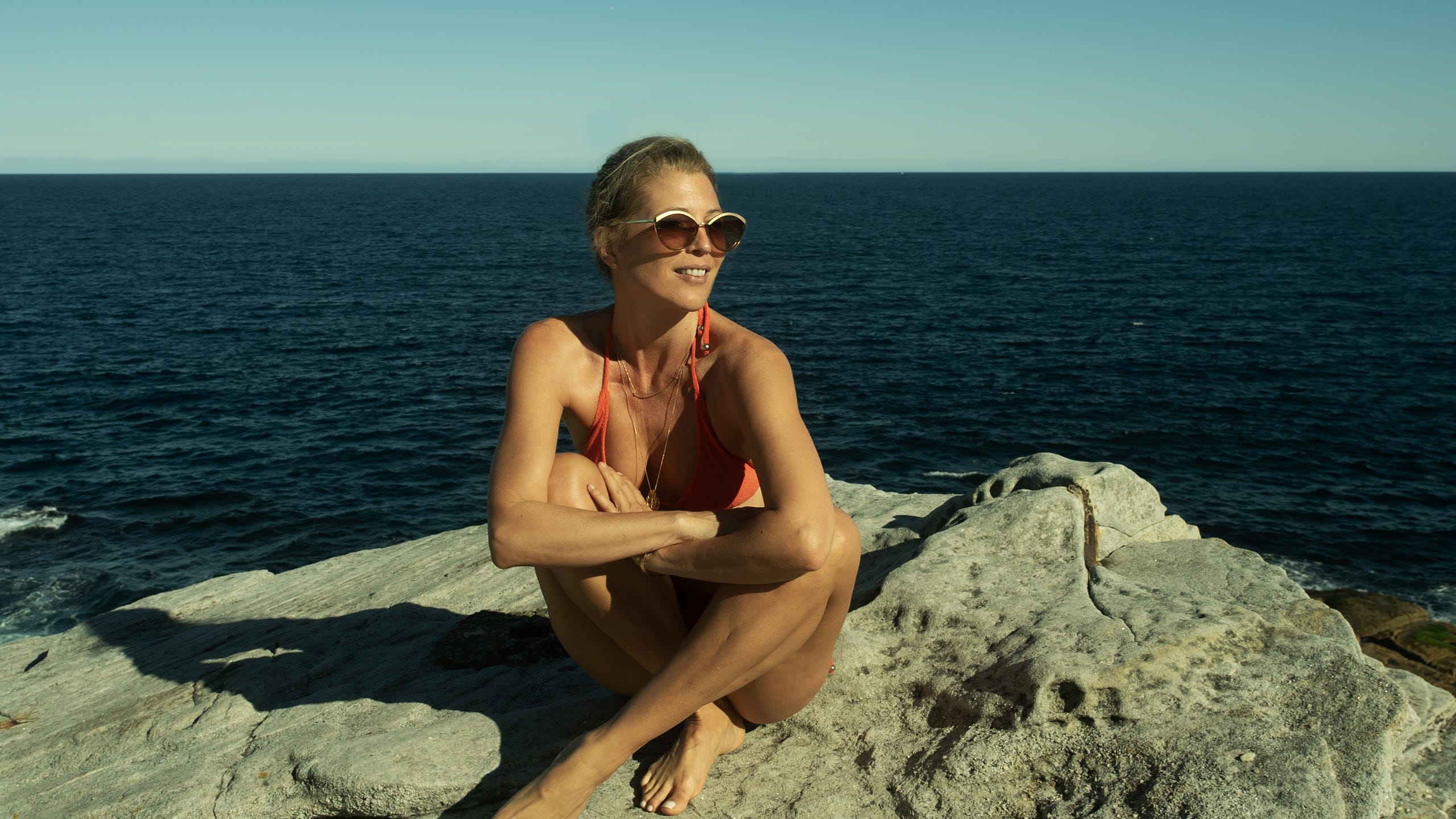
Let’s face it, sunlight got rather derided in the Industrial Revolution — people worked all day in factories, and it would have been quite upsetting to profit margins if they’d all started asking for tans. But light does more for us than melanin: it is the timing signal every cell in the body sets its clock by — the master switch for sleep, cortisol and mood. Being disconnected from the source has its downsides. And it wasn’t only light I was disconnected from. It was my own soul. I’d fallen for the trap of believing that more success, more hard work, more money would finally make me happier — and because I disregarded my nervous system, my intuition disregarded me. The people I was busy pleasing and loving didn’t really care about me — not the way I cared about them. Realising it was both freedom and pain. Shedding other people’s expectations and asking who I was without them brought the sort of a-ha moment that arrives with teeth.
So for the first time in my life, I reduced. I took on only as much work as I could bear without melting down. The rest of the time I bathed in the sun on my balcony or took long walks in nature — one of the few de-stressors with an actual evidence base. It felt like laziness, like procrastination, and occasionally I’d push again — and come burning down like Icarus. So I stopped pushing. I let myself rest for the first time in my life: the restful daydreaming that feels like healing — the wandering state neuroscience calls the default mode network, and Joe Dispenza calls the Void. I spent a lot of time there. There were no screens for the first hour of the day or the last. I started EMDR, tapping and praying. I journaled, and did scream therapy in the car at night. My doctor wrote me a prescription for medicinal cannabis, and the gummies helped with the sleep and the anxiety. I danced in the living room until I was sweaty and sprinted at my fastest when I was angry. Going back to the hard rooms of my childhood and visualising hugging myself as a little girl — validating her, loving her in the worst moments — changed something inherent in me.
There was mental peace now, a baseline of calm that had never existed before. From someone driven by FOMO and restlessness — suddenly, peace. I started loving myself for the inherent goodness in me, and for all the quirks some call ADHD and others call c-PTSD — laughing at how funny and endearing they were instead of berating myself for them. Somewhere in the middle of all that, I fell in love with the child inside me with a fierceness I’d never had before. I could finally see her and love her for who she was instead of doubting and criticising her. And I decided that from now on I would choose her, and joy, and love — with a resolve to find the silver linings without closing my eyes to uncomfortable truths. The balance was never in “thinking positively” and disregarding the rest. It was in facing everything, brutally and painfully, and then deciding to win anyway.
The periods are back, and they’re regular — for now. I’m not claiming to have outrun biology; the transition comes for every one of us, and if yours has already taken your cycle, that is not a verdict on you — bodies keep different ledgers, and mine had simply stopped early to get my attention. But the swelling has gone down, there is so much more comfort everywhere, and it’s funny, the magic a body can do when it finally feels safe, loved and looked after.
Whew, you've lived about three lifetimes in the last few years! It's heavy stuff, but I love the raw honesty about how hard it is to actually stop pushing.
I believe sharing your story is part of the process of healing too; thanks for having the courage to do so ❤️